Hiring for Brownfield Temperament — What to Listen For
Your loop screens for trivia and rapport; the job needs someone who can live inside ambiguity without reaching for a rewrite.
 Ihor NesterenkoIT System Analyst7 min read · Jun 20, 2026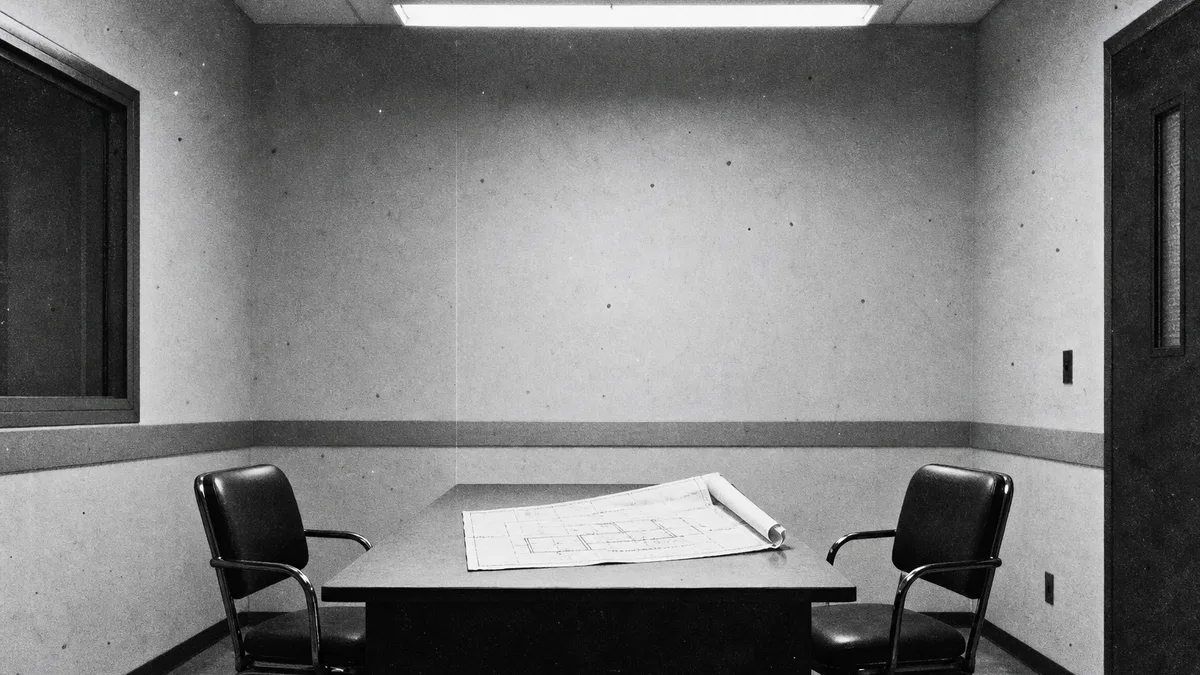
Most brownfield hiring loops still measure the wrong thing. The role asks someone to read unfamiliar code, choose incremental change over theatrical replacement, and keep revenue-critical batch jobs running while the org chart shifts underneath them. The interview asks something else entirely — whether they recall algorithmic complexity under a stranger's stare, or whether lunch conversation felt easy. That gap is not a scheduling problem. It is a measurement problem. Temperament is what you are failing to capture.
Teams that staff legacy estates well do not hire for peak brilliance in an hour. They hire for continuity under change: engineers who scope ambiguity down, stay curious when corrected, and leave systems more legible than they found them. The signals are audible in ordinary conversation. You only need to stop treating the hour as a trivia screen and start listening like the debrief room already does.
The Gap Between the Job and the Screen
Brownfield work rewards a specific temperament long before it rewards framework fluency. The person you want reads a twelve-year-old job scheduler and asks which assumption stopped being true — not which cloud would make the problem disappear. They debug production behavior without needing the codebase to match the wiki. They treat migration work as first-class engineering, not as a holding pattern until leadership approves a rewrite.
Most loops still optimize for greenfield heroics. Whiteboard rounds test recall. "Culture fit" chats test rapport — whether the candidate laughs at the same anecdotes, attended a familiar school, feels like someone you'd get a beer with. That pattern is similarity screening, not fit. Neither measures comfort with partial information on a system nobody fully understands anymore.
The mismatch shows up in month three, not in the offer letter. The hire who sailed through trivia cannot narrate a safe change on a module with three owners and no tests — they keep asking for a spec that nobody has time to write. The hire who charmed the panel treats every legacy constraint as a moral failing and starts lobbying for a rewrite before they have mapped the revenue path the batch job protects. You did not miss their skill. You missed how they behave when the wiki is wrong and the stakeholders are tired.
Why Culture-Fit Rapport Screens Similarity, Not Temperament
Managers say they want culture fit. In unstructured conversations, what they often get is similarity — shared background markers that feel like alignment but do not predict performance on messy estates. Rapport forms in the first ten minutes. After that, interviewers frequently hear what confirms the liking, not what challenges it. Gut feel is not a temperament instrument.
Personnel selection research has been saying this for decades. Most engineering orgs still hire like it never landed. Structured interviews — same questions, predefined scoring, job-analytic probes — predict job performance roughly twice as well as unstructured ones. Combined with general mental ability screening, structured behavioral interviews reach among the highest practical validity hiring science has measured.
That does not mean "just chat." It means replace trivia and gut feel with fixed probes and a rubric. Culture-fit chemistry without scoring is similarity dressed as values — structured conversation is how you hear temperament instead.
The Five Signals — What Temperament Sounds Like in the Room
Senior debriefs rarely vote on whether someone was brilliant. They argue about whether you can predict the working relationship from the hour you had. On brownfield teams, five signals carry most of that prediction.
-
Signal 1 — Scopes down instead of sprawl — Give them a vague failure — "our nightly sync is flaky." Strong candidates narrow: one window, one dependency, one question they would answer first. Weak candidates expand: new platform, new queue, new team. The debrief theme is consistent: hire the person who made the problem smaller.
-
Signal 2 — Curious when wrong, not defensive — Push back once on an assumption mid-conversation. Strong candidates adjust and ask what they missed. Weak candidates perform confidence or argue the prompt. Brownfield work is mostly being wrong in slow motion until the system teaches you where the landmines are — the same muscle as saying you don't know yet without losing the room.
-
Signal 3 — Incremental-change stories outnumber rewrite endings — Ask for their proudest rescue. Strong candidates describe improving a flawed system in place — strangler paths, guarded refactors, parallel runs. Rewrite endings are a negative signal on continuity teams, not proof of ambition.
-
Signal 4 — Names what they would leave alone — The revealing question in legacy modernization is often what you choose not to touch. Strong candidates articulate stable subsystems, revenue paths, or teams that cannot absorb churn. Reflexive modernizers treat restraint as lack of vision.
-
Signal 5 — Legible enough to predict collaboration — Could your panel describe how this person would behave in a planning meeting, a postmortem, a stakeholder call — based only on the hour? "I know exactly what it is like to work with this person" wins debriefs more often than "they were sharp."
None of these require a LeetCode account. All require you to listen for behavior, not performance theater.
Three Probes That Surface Brownfield Temperament
Drop algorithm trivia. Keep structure — that part matters more than people admit. Three fixed probes fit a sixty-minute loop if you score each dimension before you discuss "feel."
Probe A — The flaky job nobody owns. "Describe a batch or sync job that failed intermittently on a system you did not build. What did you do first, and what did you deliberately not change in week one?" Strong answer: pull logs for one window, identify the dependency that actually drifted, leave the scheduler logic alone until the data proves otherwise. Weak answer: propose Kafka before opening the runbook. Listen for diagnosis before prescription, ownership without rewrite fantasies, and explicit risk framing.
Probe B — The modernization you chose not to do. "Tell me about a legacy component you evaluated and decided to keep running as-is. What made 'no' the right answer?" Listen for business-value reasoning, pattern vocabulary (strangler fig, branch by abstraction) used sparingly and correctly, and respect for stable revenue paths. Red flag: contempt for the stack as proof of seniority.
Probe C — The wrong assumption you held for months. "When did you discover your mental model of a system was wrong? How did you behave after?" Listen for curiosity, documentation or onboarding improvements, and communication to the next person who would have stepped on the same rake. Red flag: blaming the codebase for their confusion.
Score each probe 1–5 on the five signals before the debrief. Disagreement then becomes evidence-based — "they scored low on leave-it-alone on Probe B" — instead of "I didn't feel energy."
What to Stop Listening For
Some signals feel rigorous and predict nothing on brownfield work.
Algorithm recall under stare. Interview stress and production pressure are different experiences. Trivia under stare measures anxiety tolerance, not judgment on ambiguous estates.
"We'd rewrite it" as confidence. Rewrite appetite reads as ambition in greenfield cultures. On continuity teams it reads as someone who will destabilize what pays the bills. Listen for migration as craft, not prelude.
Culture-fit chemistry without rubric. Values alignment can matter for retention. Unstructured culture-fit assessment often measures similarity to the interviewer, not alignment to stated team values. If you care about values, define them, write behavioral probes, and score them — the same way you would score technical judgment or publish a systems thinking rubric with written anchors.
Structured selection also reduces the probability that bias substitutes for competence when recruiters skip the script. That is not HR paperwork. It is how you hear temperament instead of mirror image.
Hire for the Debrief You Want
Brownfield hiring is not a softer loop. It is a sharper one — aimed at behaviors legacy work actually demands. Trivia screens the wrong muscle. Rapport screens for similarity. Temperament screens for whether someone can live inside your estate without breaking it on principle.
Listen for scope-down, curiosity when wrong, incremental stories, explicit restraint, and legible collaboration. Ask three fixed probes. Score before you debrief.
The chair across the table is not a puzzle to solve in forty-five minutes. It is a sample of how someone will behave when the wiki is wrong and the batch job still has to finish tonight.
What would your last debrief have sounded like if you had scored those five signals before anyone said "culture fit"?
More in People

The Human Cost of Silent Integrations
When nothing pages, someone still pays — usually the people who never chose the job.
6 min · August 25, 2026

Designing an Interview for Systems Thinking, Not Trivia
Rubrics hiring managers can defend — not STAR rehearsals and not recall screens.
6 min · August 17, 2026
One Live Coordination Exercise — an Interview Loop Without Trivia
Most teams know how to stack interview stages. Far fewer design one shared problem that grades how a candidate holds ambiguity with you in the room.
8 min · July 16, 2026