AI Habits Before Policy Exists — Personal Governance That Scales
When Legal has not shipped a deck, the habits you model become the team's policy by default.
 Ihor NesterenkoIT System Analyst6 min read · Aug 27, 2026
The junior BA asked a quiet question after stand-up: the senior had structured yesterday's clinic-workflow notes with a chatbot, and the junior wanted to know which tool was "allowed." Nobody in the room had an AI policy to point at. Acceptable Use said nothing useful about prompts. So the junior did what juniors do when the document is missing — they copied the senior's paste.
That is the failure mode this piece is about. Not a missing whitepaper. A programme where the first paste writes the culture by accident, and the person who pastes first is usually the person under time pressure.
The Policy Gap — Who Writes Culture by Accident
Missing AI policy is not a permission vacuum. It is a modelling vacuum. Someone still pastes. Someone still shares the structured draft. The room still learns what "normal" looks like from whoever moved first.
Surveys already show the paste is common: a large share of employees admit putting confidential company information into public generative tools. Waiting for Legal does not pause that behaviour. It leaves the behaviour unspoken.
Public LLMs make the stake concrete. Queries are visible to the provider, stored, and may be used in future development of the service. The UK NCSC's practical line is blunt: do not put sensitive information into public LLM queries, and do not submit anything that would cause trouble if it became public. Those lines do not require a forty-page deck. They require a habit at the keyboard.
Acceptable Use is not paste-time guidance. It arrives too late and too wide. The moment that matters is the second before the clipboard empties into the prompt.
On programmes where the senior has no habits either, the junior still copies — they copy silence as permission. That is the worse version of the same gap.
Personal Governance — Habits That Can Be Copied
Call the pattern Personal Governance: a small set of explicit desk habits you run before org policy exists — or while the policy sits unread — so judgment is not left to whoever pastes first.
If the phrase is new, keep this version: personal rules with a named check, visible enough that a teammate can copy them. Private preference is not governance. Unspoken practice is freelancing. Explicit habits are provisional governance.
The point is not virtue. The point is that most workplace behaviour is learned by watching someone else do it, then using that coded picture as a guide later. If your AI practice is invisible, the junior has nothing honest to copy — so they copy the risk instead.
The Desk Rules — Three Habits That Travel
Three habits are enough at footing level. More than that becomes a personal ISO framework, which is how people stop starting.
Habit 1 — Name the tool and the data class before you paste. Say it out loud or write it in one line: consumer model vs enterprise instance; clinic notes vs synthetic roles; supplier IDs vs placeholders. Naming forces the pause that policy decks never get. If the data class is personal data, UK guidance treats AI use as processing that often needs serious thought about lawful basis and risk — not a casual cleanup prompt. If you cannot name the class in one sentence, you are not ready to paste.
Habit 2 — Prefer synthetic or redacted examples; keep originals off the prompt. Structure the workflow with invented clinic names, fake patient roles, and scrubbed identifiers. Sensitive information disclosure is a named LLM failure class for a reason — once material is in the prompt path, competitive and legal harm becomes possible. On the healthcare programme, the senior who pasted real clinic names taught the junior that "structure the notes" meant "send the notes." The senior who pasted synthetic roles taught the opposite lesson in the same thirty seconds.
Habit 3 — Say what you checked when you share AI-assisted output. A one-line footer is enough: tool used, data class used, what you verified by hand. Overreliance on fluent output is its own risk class. The check is the habit. The sentence is how the habit travels.
Secure-design guidance for AI systems asks organisations to give users clear risk guidance and, for external APIs, controls such as confirming before sending potentially sensitive information. Until your org wires that into a gate, you can still run the confirmation yourself. That is Personal Governance at footing: the confirm step lives with you.
A parallel from a large engineering shop is useful only as a shape: keep unrelated customer contexts out of the same AI session. You do not need their platform. You need the same refusal at desk scale — one prompt, one context, named.
Worked once through: clinic-workflow notes arrive messy after a workshop. Before any paste, write "consumer chatbot · synthetic roles only." Replace clinic names with Clinic A / Clinic B. Structure the process steps. Paste the scrubbed text. When you share the pack, add: "Structured with a consumer model on synthetic roles; I checked the exception path by hand against the workshop recording." That is three habits in one afternoon, with no Legal meeting booked — and it is still not a substitute for examining the pack before the workshop is treated as decided.
Visibility Is the Scaling Mechanism
Private virtue does not scale. A junior cannot copy what they cannot see.
Bandura's modelling claim is not poetry. Attention, retention, reproduction, and motivation are required — observation is active. A silent good habit fails the first step. A short channel note — "synthetic roles only; no clinic names in the prompt" — passes it.
Keep the visibility boring. Not a performance of caution. Not a virtue thread. A factual line next to the draft so the next person has a model worth keeping.
On the same healthcare programme, the senior posted that line once when sharing an AI-structured pack. The junior stopped pasting supplier IDs the next day. No policy had arrived. The model had.
Bans alone are a weak answer to a tool people already treat like a colleague. Habits that are visible survive the gap between "we should ban this" and "Legal will write something." They also survive the opposite failure: a long policy nobody opens at paste time.
Where Personal Habits Stop
The fair objection is freelancing: without org policy, personal rules are just one analyst inventing law.
That objection is right about authority. You do not get to bind Legal, the board, or a regulated programme with a Slack footer. Where it stops holding is the claim that silence is safer. Silence is still a rule — an opaque one. Explicit habits are provisional. They are what an honest policy later has a chance to codify, because they describe what people already do when the paste is urgent.
Personal Governance stops where the room must be bound. A signed team agreement before anyone pastes client context is a different artifact — minimum lines the group owns together, not a senior's private virtue. This piece does not replace that. It starts earlier: with the person the junior is already watching.
It also stops where Legal must own retention, vendors, and DPIAs. Your habits do not finish that work. They keep the programme from teaching the wrong lesson while that work is late.
Name the tool and the data class. Prefer synthetic examples, and say what you checked. Until the policy exists, that is the governance the room can copy.
More in People
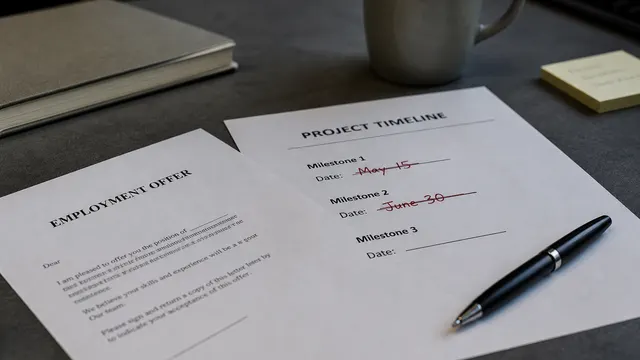
Three Questions Before You Accept the Next Inherited Program
Self-efficacy starts before Day 1 — run the Acceptance Gate, not a motivation essay.
6 min · August 31, 2026

Mentoring Through Inherited Mess — What Helps and What Performs Help
Brownfield mentorship is co-mapping the mess — not performing a greenfield buddy script.
5 min · August 29, 2026
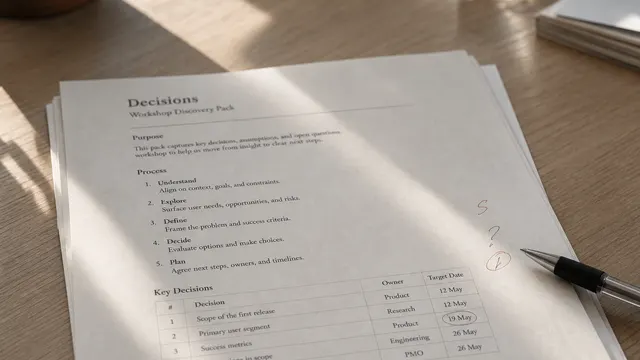
Critical Thinking Audit for AI-Assisted Discovery
A complete-looking pack can still file a number nobody said as a workshop outcome.
7 min · August 19, 2026