Boundaries When You're the Only Analyst on a Hot Program
Scope and escalation without martyrdom — when you are the only analysis capacity in the room.
 Ihor NesterenkoIT System Analyst6 min read · Aug 9, 2026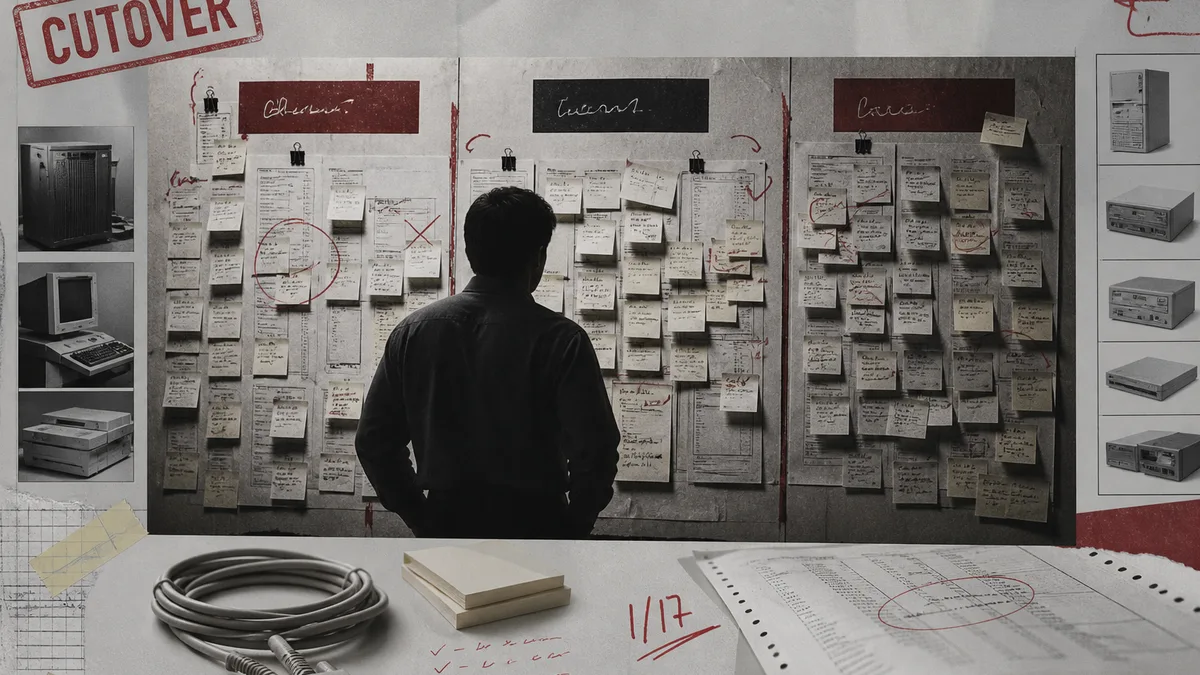
The handover was a shared drive and a smile. "You're the BA on this one." One headcount. A logistics ERP cutover already late. Three warehouses in scope. A sponsor who still believed Friday was real.
By Wednesday the inbox was not a backlog. It was a queue of other people's emergencies: workshop packs, "quick" process walks, a fourth site that "just needs a light touch," and a nightly Slack thread that assumed I was still online. Sole capacity had been mistaken for infinite capacity. Nobody had been cruel. They had simply never written down what one analyst could finish before Friday — so every ask felt reasonable in isolation and impossible as a set.
That mistake is common on hot programmes. It is also fixable — if you treat scope as a programme decision instead of a personality test.
Sole Capacity Is Not Infinite Capacity
Someone will say you are not a team player. Engage that claim on delivery terms, not lifestyle terms.
When you are the only analyst, every unanswered ask becomes a silent commitment. The plan prices your evenings as free. The fourth warehouse workshop lands as "just one more" because there is no second BA to refuse it. The cost shows up later as a late discovery in UAT — the kind that burns the whole room's calendar to repair what a Tuesday prioritisation would have caught.
There is a logical reason this keeps happening. Headcount looks like a number on a chart. Capacity is a finite set of finished outcomes per week. One person cannot be both the mapping resource and the overflow valve for every workshop that did not get a facilitator.
Practice tells the same story. The first late night you cover "just this once," the plan learns a new rule: overflow is free. Next sprint the overflow is larger. By the month's end, martyrdom is the unofficial staffing model — and the board still shows green because the red work never had a ticket.
Martyrdom looks like loyalty in the moment. It is unpriced capacity. Once the programme learns you will absorb overflow, it will budget that overflow forever. The consequence is not only personal exhaustion; it is a delivery plan that cannot tell truth from hope — the same throughput mirage where visible output rises while capacity quietly erodes. On a rescue the same unnamed overflow is self-erasure into the date.
Sustainable pace is not a wellness slogan here. Even the Scrum Guide frames pace as something that improves the team's focus and consistency when the work is run that way — not when one person secretly extends the day so the board stays green.
The Scope Boundary Card
Print one page. Three columns. Update it in the stand-up, not in your head at midnight.
- In — Named outcomes this week that only you can finish, tied to the cutover: e.g. process maps for warehouses A and B; exception list for late ASN files; decision log for override ownership.
- Parked — Asks that wait with a revisit date: warehouse C polish after A/B sign-off; "nice-to-have" swimlanes for a future release.
- Escalate — Conflicts that need a sponsor or delivery lead decision: fourth-site workshop this week or Friday cutover date or a borrowed analyst for three days. Name the trade-off. Do not absorb it silently. If two In items already fill the week, a third In is not optimism — it is an Escalate wearing a smile.
The card does one job the calendar cannot. Focus blocks protect attention; they do not decide which warehouse map is more important than a discovery pack. Without an In list, every protected hour fills with whoever shouted last.
Worked example — the fourth warehouse
Same cutover week. Sponsor asks for full maps for A, B, and C by Friday, plus a discovery workshop for site D "so we stay ahead."
In: A and B maps + the late-file exception list — because those block go-live.
Parked: C polish until A/B are signed; revisit Monday with a time-box.
Escalate: site D workshop this week. The decision you are forcing is explicit: slip Friday, drop D until after cutover, or add analysis capacity. What you are not doing is saying yes to all four and hoping sleep covers the gap.
Put the card where the room already looks — Confluence home, Miro frame, the stand-up board. Private boundaries fail when the room cannot see the queue. Public ones turn "I can't" into "here is the conflict — pick."
If the sponsor picks "all four and Friday," you have a decision on record. That is better than a smile and a silent crash on Thursday night. The card did its job: it made incompatible requirements visible while someone with authority could still choose.
Escalation Without Martyrdom
Escalation is not a complaint. It is a request for a decision the programme already owes itself.
Script shape, reserved and specific:
"If I take the site D workshop this week, A/B maps slip past Friday. Which outcome do you want protected — the workshop date or the cutover date? I can park D until next Tuesday if we hold Friday."
You are naming the fork. You are not narrating exhaustion. You are not asking for sympathy. You are refusing to invent capacity the plan does not have.
Who you escalate to matters. Prefer the person who owns the date or the budget for a second pair of hands — usually the delivery lead or sponsor, not a peer who can only share the guilt. Peers can help sequence; they rarely can move Friday.
What you refuse: silent absorption. No "I'll figure it out" that becomes a 22:00 mapping session the plan never sees. Hidden work trains the organisation that your boundary was optional — and that the next boundary will be optional too.
You will still hear "we're all stretched." Answer the stretch with the card: here is what is In, here is what is Parked, here is what needs a decision. Shared stretch without a queue is just shared fog.
Anticipate the second pushback: "Can't you just do a lighter version of D?" Sometimes yes — if lighter is defined as a one-page risk list with a parked full workshop. Sometimes no — if lighter still costs the hours that protect A/B. Say which. Vague compromise is how In quietly becomes Everything.
Role Clarity Beats Heroics
UK Health and Safety Executive management standards put this in organisational language, not self-help language. Role means people understand their responsibilities and the organisation avoids placing conflicting requirements on the same person without a way to raise the conflict. Demands means work should be adequate and achievable relative to agreed hours — not relative to how late you are willing to stay.
Those standards are not a BA toolkit. They are a reminder that incompatible asks on one analyst are a design problem. The Scope Boundary Card is how you make the conflict visible early enough for someone with authority to choose.
This is different from protecting focus blocks on a hostile calendar. Focus blocks defend attention. The boundary card defends what attention is for. You need both on a hot programme; this piece is about the second.
A sole analyst's boundaries are programme decisions — written on a card the room can see — not proof of how much you care.
More in People

The Human Cost of Silent Integrations
When nothing pages, someone still pays — usually the people who never chose the job.
6 min · August 25, 2026

Group Belief After a Stall — Without the Cheerleading Session
The room does not need a reset afternoon. It needs one result it can check together.
6 min · August 23, 2026

Status Updates That Tell the Truth Without Theatre
RAG honesty for reserved narrators — colour, evidence, and one decision, not a calm green slide.
6 min · August 12, 2026