One Live Coordination Exercise — an Interview Loop Without Trivia
Most teams know how to stack interview stages. Far fewer design one shared problem that grades how a candidate holds ambiguity with you in the room.
 Ihor NesterenkoIT System Analyst8 min read · Jul 16, 2026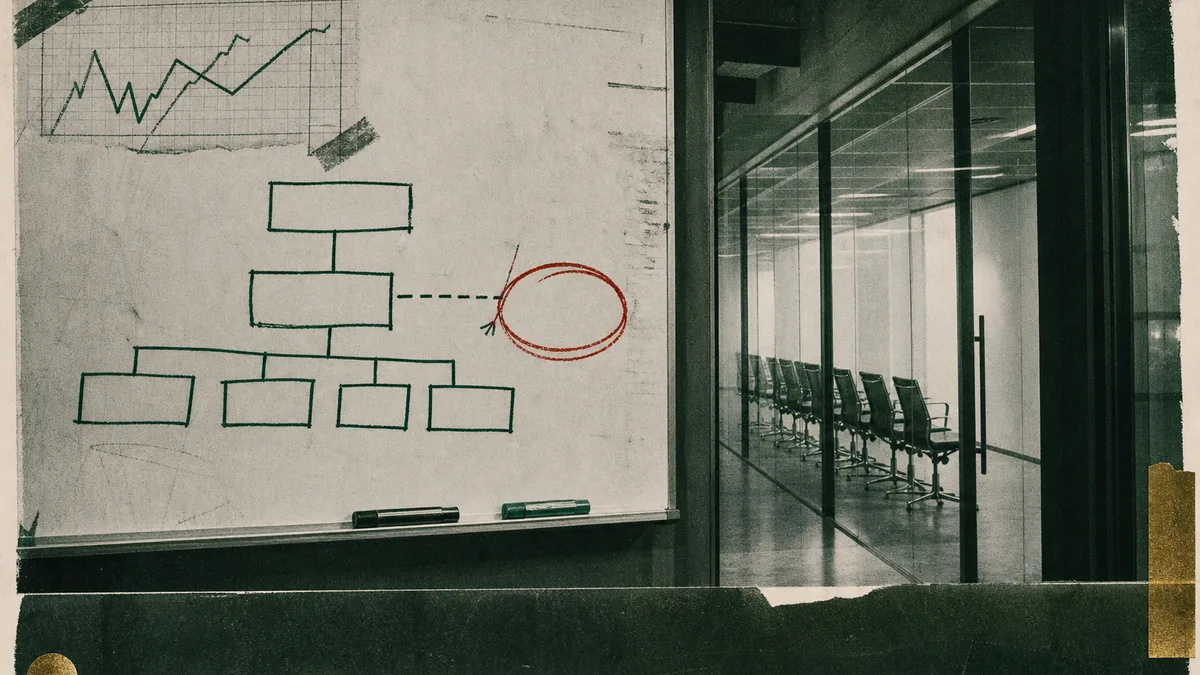
Most hiring managers can describe their loop in a sentence: screen, tech round, behavioural round, panel, offer. Far fewer can name the single hour that tests whether a candidate can sit inside an unfinished problem with another person — without racing to a clever answer or freezing until someone hands them a spec. That hour is the one the job will keep asking for. Trivia and brainteasers are what many loops still put in its place.
The failure mode is ordinary. A warehouse stock feed arrives late three nights in a row. The SLA clause everyone quotes does not say what happens when the upstream file is empty rather than delayed. Nobody owns the gap. The person you need next week is the one who can hold that incompleteness with a stakeholder and still propose a next falsifiable step. The person your loop often selects is the one who solved a riddle faster than the last three candidates.
The Loop That Grades the Wrong Skill
Trivia screens measure recall under a stranger's stare. Brainteasers measure composure under arbitrary stress — and, often, prior exposure to the same puzzle genre. Google's own people-operations leadership eventually called the classic guesstimates a complete waste of time: they do not predict performance, and they primarily make the interviewer feel smart. Practitioners and applicants still react badly to brainteasers when researchers ask them directly.
What the role needs is different. Delivery work is under-specified work with real stakeholders attached. Ambiguity arrives as a missing clause, a silent integration, a process that drifted after the last reorganisation — not as a sealed riddle with a witty solution. If your instrument is a puzzle, you are grading puzzle skill.
That mismatch is the whole hiring problem in one line.
The cost shows up after the offer letter. The hire who sailed through trivia asks for a complete specification before they will touch the late feed. The hire who charmed the brainteaser round treats every open question as a chance to perform cleverness. Neither behaviour helps operations at 06:00 when the file is empty and the picking floor is waiting.
One Live Coordination Exercise — the Design Claim
Replace the buffet of soft screens on the ambiguity axis with one live coordination exercise. Keep a separate craft check if the role demands it — a job-relevant work sample, not an algorithm trivia pad. Work samples and structured interviews have sat near the top of personnel-selection validity tables for decades — among the strongest predictors of job performance. Newer meta-analyses revised downward the absolute coefficients. The relative lesson did not move: structure plus job-like work still beats gut feel and puzzle theatre.
The design claim is narrower than "add more interviews."
Stage count is not signal density. Three half-scored chats often produce three opinions about rapport. One shared, scored exercise produces behaviours you can point to in the debrief: who clarified ownership, who named unknowns without apology, who proposed a next step cheap enough to falsify.
A live coordination exercise, in plain language, is a work-like problem the candidate and interviewer hold together for a fixed window — typically forty to sixty minutes — with a rubric decided before anyone sits down. If that phrase is new, the one-sentence version worth keeping is: you are sampling how they coordinate under incomplete information, not how they perform solo for an audience.
One hard exercise beats a buffet of soft screens when the axis you care about is ambiguity. Complementary craft screens can stay. The vignette carousel is what to cut.
The Exercise Sketch — Ambiguity You Can Hold Together
This is the section that replaces the trivia pad — not another soft chat with a whiteboard nearby.
Start from a requirement a stakeholder would actually say.
"Nightly stock for the regional warehouses must be available by 06:00 so picking can start. For three nights the feed arrived after 07:30, and once it arrived empty. Operations wants to know who owns the delay and what we change before peak season."
That is not a brainteaser. It is an unfinished delivery problem. Translate it into a sketch the candidate can draw with you: upstream file, transformation job, warehouse stock table, the SLA sentence that only covers "late," the empty-file case nobody named, the operations owner who will escalate, the integration owner who thinks the feed is "fine if it lands."
Leave the sketch incomplete on purpose. The missing ownership line and the empty-file branch are the instruments. If you hand them a finished architecture diagram and ask them to narrate it, you have built a presentation, not a coordination probe.
Then run a cheap proof of concept for the interview design itself — not a production fix.
- Step 1 — Hand them the stakeholder sentence and the blank diagram. Ask what is known, what is assumed, and what they would refuse to decide in the first ten minutes.
- Step 2 — Co-build the sketch. You add one constraint at a time — empty file, silent failure, two owners who disagree — the way a real discovery call does. You are a participant, not a silent judge.
- Step 3 — Demand one next falsifiable step. Not a rewrite. Not a platform. A check that would prove or kill the leading hypothesis before anyone writes a project plan.
- Step 4 — Score immediately against a fixed rubric. Same dimensions every candidate. Same anchors for "strong / mixed / weak."
Forty-five minutes is enough if you protect the shape. The exercise fails the moment the panel already loves one architecture and is waiting for the candidate to invent it.
What the Room Scores — Coordination, Not Cleverness
Structure is what makes the hour fair: same prompt family, same facilitation order, same rating anchors for every candidate — the core of a structured interview. The content should still look like the job. A work sample asks them to perform tasks identical or closely similar to the work itself.
It's not a spectator sport — it's shared work.
If you only watch and never co-hold the problem, you are running a performance. Coordination cannot be graded in the absence of coordination.
Score behaviours you can observe, not vibes you can defend later.
- Clarifies ownership — Names who decides, who is informed, and where the gap sits between operations and integration.
- Surfaces unknowns without theatre — Says what is missing; does not invent certainty to look senior.
- Scopes before sprawling — Shrinks the problem to one night, one warehouse, one failure mode before proposing platforms.
- Proposes a falsifiable next step — A log check, a sample empty file, a one-page SLA amendment — something that can fail cheaply.
- Coordinates with you — Uses your constraints, disagrees cleanly, does not perform a monologue at the whiteboard.
Picture two candidates on the same stock-feed prompt.
The strong hour slows the room. They ask whether "late" and "empty" are the same incident. They refuse to redesign the warehouse estate before anyone opens last Tuesday's file. Their next step is concrete: pull one empty payload and walk it through the job with the integration owner present. You leave knowing how they would behave in a real discovery workshop.
The weak hour races. Event bus first; ownership question never quite lands. Your constraints sound like interruptions. The close is a rewrite narrative that scores ambition and nothing on coordination.
Cleverness was never the question.
Facilitator moves that preserve signal: add constraints slowly; answer process questions; do not rescue them into your favourite design; stop the exercise when you have enough behaviour to score. Silence that feels like a quiz is already broken.
Where the Design Breaks
Realism can become unfair gatekeeping. If only candidates from your exact industry can parse the prompt, you are testing domain vocabulary, not coordination temperament. Keep the shape of a real problem — late feed, missing clause, split ownership — and strip proprietary jargon a stranger could not know in ten minutes. Portable frames beat insider quizzes.
Panel drift is the quiet killer. Without a written rubric, each interviewer reinvents "good," and the exercise collapses into culture-fit theatre with a whiteboard prop.
Puzzle creep is related. The moment there is one correct architecture the panel already loves, you have reinvented a brainteaser in enterprise clothing. Brainteasers were always the wrong instrument for ambiguity skill. An enterprise puzzle with a secret answer is the same instrument wearing a better suit.
Over-rehearsed candidates will perform ambiguity theatre — lots of thoughtful nodding, no falsifiable next step. The rubric catches polished vagueness if you insist on a concrete check before the hour ends. Shyness is a different failure mode: lower the false negative by stating upfront that co-work is expected, questions are welcome, and disagreement is signal, not risk.
Remote parity matters. Shared doc or shared board; same time box; same rubric. If the medium becomes the test, you are no longer grading coordination.
Front-load the cost honestly. Designing and calibrating one good exercise takes longer than copying a brainteaser list from the internet. The return is a debrief that names behaviours instead of vibes — and a hire whose first discovery workshop does not surprise you.
Close
Trivia grades rehearsal under pressure. Brainteasers grade composure under arbitrary stress. One live coordination exercise grades whether someone can hold unfinished work with you — which is what week three on a delivery programme actually looks like.
Which unfinished problem on your estate could become a forty-five-minute exercise without leaking a single "right" architecture — and what would your rubric refuse to reward?
I'd value hearing how it went — particularly the parts that didn't go to plan.
More in People

The Human Cost of Silent Integrations
When nothing pages, someone still pays — usually the people who never chose the job.
6 min · August 25, 2026

Designing an Interview for Systems Thinking, Not Trivia
Rubrics hiring managers can defend — not STAR rehearsals and not recall screens.
6 min · August 17, 2026
Hiring for Brownfield Temperament — What to Listen For
Your loop screens for trivia and rapport; the job needs someone who can live inside ambiguity without reaching for a rewrite.
7 min · June 20, 2026