Feedback After a Reorg When the Chart Lies
New titles feel like clarity. Until you give feedback that cites the box — and discovers the work still runs through someone the slide deck forgot.
 Ihor NesterenkoIT System Analyst7 min read · Jul 12, 2026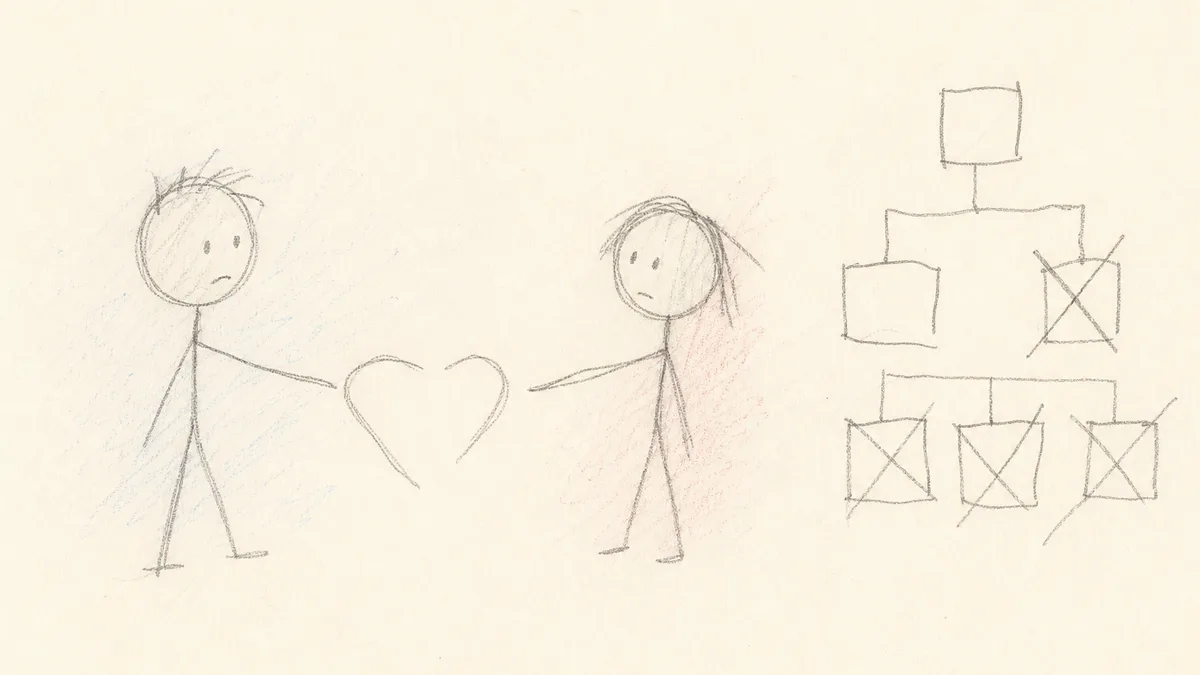
For years I treated the post-reorg org chart as the coordinate system for difficult conversations. New title, new reporting line, new place to aim praise or critique. It looked respectful. It looked adult. It looked like I was helping the structure settle.
It took a retail ERP cutover — and a feedback conversation that went sideways in twenty minutes — to learn that the chart updates faster than ownership. Credible feedback in that lag window has to cite system truth: who owns the interface, who can unblock the cutover, who absorbs the late feed. Not the newly printed box.
The mistake is simple and expensive: feedback that sounds loyal to the reorg while citing a map that is still fiction relative to the estate.
The Chart Lag
Reorganisations redraw the formal organisation almost overnight. Names move. Boxes rename. HR systems and all-hands decks catch up in days.
The informal organisation does not. People still know who can get a schema change through the board, who the vendor will actually return a call to, and which overnight job will silently skip a file if nobody watches it. Those paths lag. Sometimes for months.
Management research has been blunt about this for decades: much of the real work happens despite the formal chart, through networks of advice and trust that cross the lines on the slide. After a reorg, the formal design can change quickly while the emergent pattern of who still helps whom adjusts with limits and lags.
That gap is the Chart Lag. Titles reprint overnight. Ownership takes a quarter.
The new chart makes feedback worse before it makes it better. Fresh titles feel like clarity; they become a false coordinate system for critique until ownership catches up.
Give feedback as if the lag were already closed, and you are not being loyal to the reorg. You are using coordinates that have not earned the work yet.
Complex change makes this worse. When several kinds of change land at once, role ambiguity rises — people are unsure what they own while structures and procedures drift. The new chart can look like an answer to that ambiguity. In the lag window, it is often a prettier form of the same question.
System-Truth Feedback
The pattern I now use has three beats. Say something about the work, show where the estate proves it, and name a consequence the other person can check without consulting the slide deck.
Practitioners who need a label can call this System-Truth Feedback. If the term is new, the one-sentence version worth keeping is: feedback that cites evidence the system can verify, not a title the reorg just printed.
Claim about the work, not the box
Open on a concrete failure or friction in delivery — a late status that blocked a cutover window, a RACI that still lists the pre-reorg steward, a feed that fails silently. Do not open on "as the new integration lead, you should…"
Title-first framing pulls attention toward status and identity. Feedback research has a hard finding here: interventions that shift attention toward the self, rather than the task, are more likely to hurt performance than help it — and more than a third of feedback interventions in a large meta-analysis made performance worse. In a reorg, title-talk is self-talk wearing a polite suit.
Evidence from the estate
Ground the claim in something the other person can inspect: an interface, a queue, a change-board entry, a cutover checklist, an escalation that still routes to the old steward. Ask "who can unblock this?" before you ask "who is your manager now?"
On that retail ERP programme, I told a newly titled integration lead that their status updates were arriving too late for the cutover war-room. The tone was careful. The content was wrong. The bottleneck was an overnight stock feed with no named owner after the reorg — still watched, informally, by a warehouse analyst who no longer sat in the same box. Until we named the feed, the conversation felt like politics. Once we named it, it became a repair.
The failure mode on this beat is inventing "system truth" that is really opinion with a technical costume. If you cannot point to an artefact — a job name, a board row, a ticket, a runbook step — you do not have evidence yet. You have a vibe. Hold the feedback until you have the artefact.
Consequence they can verify
Close the loop with a check that does not require believing the chart: "If the feed has an owner by Friday, the war-room stop-the-line drops; if it doesn't, we still have the same risk regardless of titles." That is consequence argument, not performance theatre.
Trust research after organisational change treats feedback as a diagnostic step before repair — people name what broke, then the team acts. System-Truth Feedback is that diagnostic aimed at the estate, not at the org-chart ritual.
When Kind Title-Feedback Deepens Distrust
Harsh critique aimed at the wrong box is the obvious failure. Kind praise aimed at a title someone cannot yet exercise does similar damage — quieter, harder to spot.
You congratulate the new "platform owner" on owning the platform. Six weeks later they still cannot approve a schema change because the change board lists last year's steward. They smile in the meeting. They learn that feedback tracks appearances.
That is the quiet cost. Kind title-feedback can deepen distrust.
Title-based kindness trains cynicism the same way title-based critique trains defensiveness. Both pretend the Chart Lag has already closed.
Gallup's change data points the other way: when people strongly agree they had chances to give honest feedback about organisational changes, confidence in leaders jumps sharply. Honesty here is not cruelty. It is naming what still works and what does not — including when the new structure has not yet caught the work.
Respect the Structure Without Citing Fiction
The fair objection is real: "We have to respect the new structure." Respect matters. Undermining legitimate new authority is not the goal. Neither is sabotaging the reorg with nostalgia for the old chart.
Respect for structure means you do not pretend the reorg never happened. You use the new names in public forums. You route formal decisions through the new reporting line once that line can actually decide.
Where the objection stops holding is the lag window — when the new title cannot yet unblock the feed, approve the change, or escalate the vendor, and everyone in the room knows it. Citing that title as if it already owned the bottleneck is not respect. It is fiction with better stationery.
There is a second failure mode: using "system truth" as cover to ignore the new manager entirely. That is not analysis. That is politics with a better vocabulary. If the new manager cannot unblock the work yet, bring them the interface evidence with them — so authority and ownership can converge — rather than routing around them forever.
A practical test: if the person you are about to praise or correct cannot change the outcome you are discussing — because the estate still routes elsewhere — you are giving chart-feedback.
"Who unblocks this?" is a better feedback anchor than "who is your manager now?"
Pause. Name the interface first. Then talk to the person who can move it, and make sure the titled owner is in the loop so the chart can catch up to the work.
What to Try This Week
Before your next difficult conversation after a reorg, write three lines privately:
- Claim — one sentence about the work, with no title in it.
- Evidence — one artefact from the estate (feed name, board entry, escalation path, cutover step).
- Consequence — one verifiable check in the next few days.
If you cannot fill the evidence line, you are not ready to give the feedback. You are ready to go find the interface.
If the evidence points sideways — to a peer who lost the title but kept the escalation path — say so without humiliation. The goal is not to crown the informal network. The goal is to stop pretending the wet-ink chart already runs the estate.
The Chart Lag is ordinary. Treating it as a feedback coordinate system is optional — and expensive.
Credible feedback after a reorg needs an honest claim about the work, evidence the estate can verify, and a consequence that does not depend on believing the slide deck.
More in People

Trust Repair After a Missed Go-Live — What Actually Moves the Needle
Behavioural evidence on a known rhythm beats another communications campaign.
7 min · August 11, 2026

Rebuilding a Working Relationship With a Sponsor Who Stopped Believing
When belief leaves the room, grids don't bring it back — small deliveries the sponsor can check do.
7 min · July 14, 2026

The Apology That Fixed Nothing
A templated sorry after a small miss repairs your discomfort, not your team's trust — and the wrong script can cost you more than silence.
6 min · June 30, 2026