How to Ask for a Raise as an Engineer
The conversation, the timing, the number — without the confidence-culture nonsense
 Serhii MalyshevSoftware architect and tech lead6 min read · Jul 6, 2026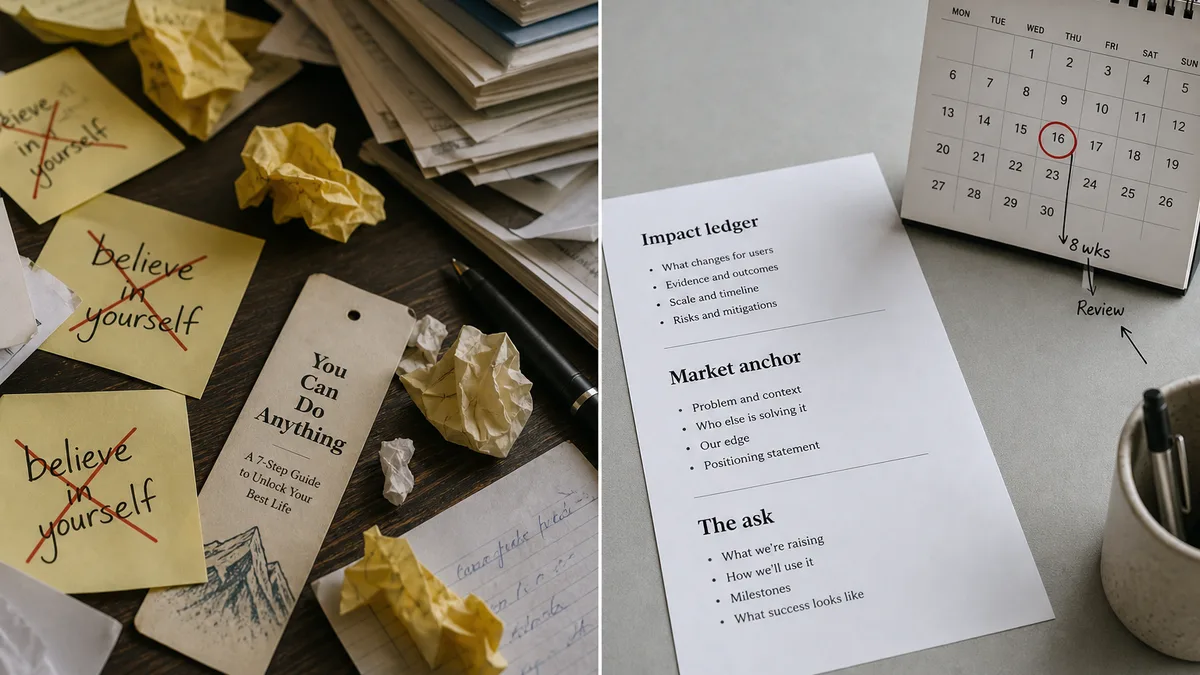
When I first treated a raise like a performance, I rehearsed tone. Grateful or firm? Confident but not arrogant? I watched videos about power postures and read posts that treated salary like improv. Enough cycles on both sides of the table, and the pattern cleared: your manager is not grading your wattage. They are trying to win an internal argument with HR and finance using evidence they did not have to assemble at midnight.
That reframing is the whole game. A raise conversation is a scheduled briefing where you hand over a packet your manager can forward — impact, market, number — and you pick a date when budgets still move. Treat it like a design review for your compensation: inputs, benchmarks, one output. Everything else is noise.
The raise isn't a mood — it's a briefing
Your manager's job in a compensation discussion is translation. They take your case and make it legible to people who have never seen your pull requests. "I feel undervalued" does not survive that hop. "Here are four outcomes I owned, here is where my pay sits against the band for this level, here is the adjustment that closes the gap" does.
Career content keeps selling the wrong skill. Confidence culture treats the raise as a personality audition — lean in, speak up, believe in yourself. The research on who actually asks doesn't support the old story that one gender simply doesn't negotiate. People ask.
Outcomes diverge for other reasons — approval rates, bands, backlash when asks read as adversarial rather than aligned. Framing the conversation as joint problem-solving beats performing nerve.
None of that is an excuse to wing it. It is an argument for preparation that looks like engineering: inputs, benchmarks, a single output.
If you skip the packet and show up with conviction alone, you force your manager to improvise on your behalf. Most won't.
They'll say "let's revisit at review" — which is often code for "I don't have anything I can forward."
Build the Raise Brief — three slots your manager can forward
I call the prep packet a Raise Brief. Three slots. One page. Your manager should be able to paste from it into whatever form their org uses.
Confidence doesn't travel through HR. Evidence does.
-
Slot 1 — Impact ledger — Four to six lines in Challenge–Action–Result shape. Not a task list. Each line names what broke or what goal you hit, what you did, and what moved. "Migrated auth service" is a task. "Led auth migration that cut login p95 latency 40% and removed the top weekend page source" is evidence. Approximate numbers beat silence. If you truly have no metric, name the stakeholder unblocked or the risk removed — but try harder first.
-
Slot 2 — Market anchor — Role, level, payroll geography. Pull the band your employer would recognize: posted range if you are in a pay-transparency jurisdiction, internal level guide if you have one, and external checks — Levels.fyi for big-tech-shaped roles, BLS occupational percentiles for a sanity floor. Cross-check percentile spreads so you are not anchoring on a single median. You are not citing Twitter envy. You are showing where your current pay sits against the 50th and 75th percentile for that level in your market.
-
Slot 3 — The ask — One number. Not "more." Not a range so wide it reads as uncertainty. If market median for your scope is $165k and you are at $148k, your ask might be $162k — high enough to negotiate down, tied to band math you can explain in one sentence. Tenure is context, not evidence. "I've been here three years" is the weakest line in the packet. Delete it.
Worked example: mid-level backend engineer at a 200-person SaaS shop, payroll geo "Tier 2 US." Ledger lines cover owning checkout latency work (−38% p95), leading an on-call runbook rewrite (pages down 30% quarter over quarter), and mentoring two juniors through their first production releases. Market anchor: employer's posted L4 band $145k–$175k; Levels.fyi 50th/75th for comparable scope $158k/$172k; current base $149k. Ask: $165k — top third of internal band, aligned with external 60th percentile. The manager's forwardable sentence writes itself.
Failure mode: stuffing the ledger with team accomplishments you didn't own. HR has seen it. One honest line beats five shared wins.
Timing — when the calendar beats your nerve
The costliest mistake is waiting for the review form. By then, many orgs have already allocated pools.
Budgets close before feelings do. Seed the conversation six to eight weeks before your formal cycle — when your manager can still influence headcount and merit spreadsheets. If your company locks budgets in Q3, August is better than the day before ratings close.
Off-cycle is valid when scope step-changes: you are operating a level up, absorbing a fired architect's domain, or payroll geo re-tiered without a base adjustment. It is weaker when you simply feel behind — feeling is not a trigger; band drift is.
Do not ambush. Do not ask fresh off a production incident you caused. Do not ask the same week you declined a critical project. Calendar plus evidence.
Trade-off: sending the brief ahead vs walking through live. Default to twenty-four hours pre-read. Live-only surprises force your manager to react instead of advocate. If your culture hates pre-reads, send bullet points in the invite body — still not a cold ask in the last five minutes of a sprint review.
The conversation — script without theater
Schedule a dedicated 1:1. Put Raise Brief in the invite title so it is not a surprise. Send the one-pager twenty-four hours ahead — the same send-ahead discipline as a performance prep packet.
Talk track, four beats:
- Frame — "I want to align my compensation with the scope I've been carrying. I sent a one-page summary."
- Evidence — Walk the two strongest ledger lines. Stop at two unless they ask.
- Market — "My read of the band for this level puts me below the range we'd post today. Here's the anchor."
- Ask — State the number. Then stop talking.
Silence is not weakness. It is structure. Managers often need a beat to switch from listening to planning their internal route.
If the answer is no, ask for criteria, not consolation: "What specific outcomes would put me at the top of the band?" and "When do we revisit — date, not vibe?" Get it in writing if your culture allows. Rigid band at max? Ask for bonus, equity refresh, or a written six-month review with pre-agreed conditions — still tied to market, still evidence-led.
What "no" usually means: not you, this quarter. Budget timing, band cap, or your manager lacks a story finance accepts. The criteria question separates "not now" from "not ever." If they can't name criteria, you learned something about the org — file that away.
What to stop saying
Drop the confidence preamble. Drop tenure without impact. Drop comparing yourself to a colleague by name.
Drop ultimatums unless you are actually leaving — bluffs destroy trust faster than they move bands.
Your manager is not your therapist and not your adversary. They are your internal sales rep. Give them a brief they can sell — and keep the standing 1:1 doc current so the ask is not the first time they've heard the impact.
Build the packet. Pick the window. Name the number. If the sponsor relationship is the real blocker — not the band — fix the credibility ledger first.
That is the raise.
More in People

How to Switch Teams Without Burning Bridges
A polite goodbye does not stop the hallway sentence from opening your next 1:1.
7 min · August 21, 2026
Your First Performance Review — How to Prepare
What to bring, what to say, what to ask — the version nobody gives you before the meeting
7 min · June 25, 2026
Your Manager Has a 1:1 Playbook. You Need a Prep Habit.
Everyone agrees one-on-ones matter — almost nobody teaches engineers what to put in the shared doc before the calendar ping.
5 min · June 14, 2026