Your Manager Has a 1:1 Playbook. You Need a Prep Habit.
Everyone agrees one-on-ones matter — almost nobody teaches engineers what to put in the shared doc before the calendar ping.
 Serhii MalyshevSoftware architect and tech lead5 min read · Jun 14, 2026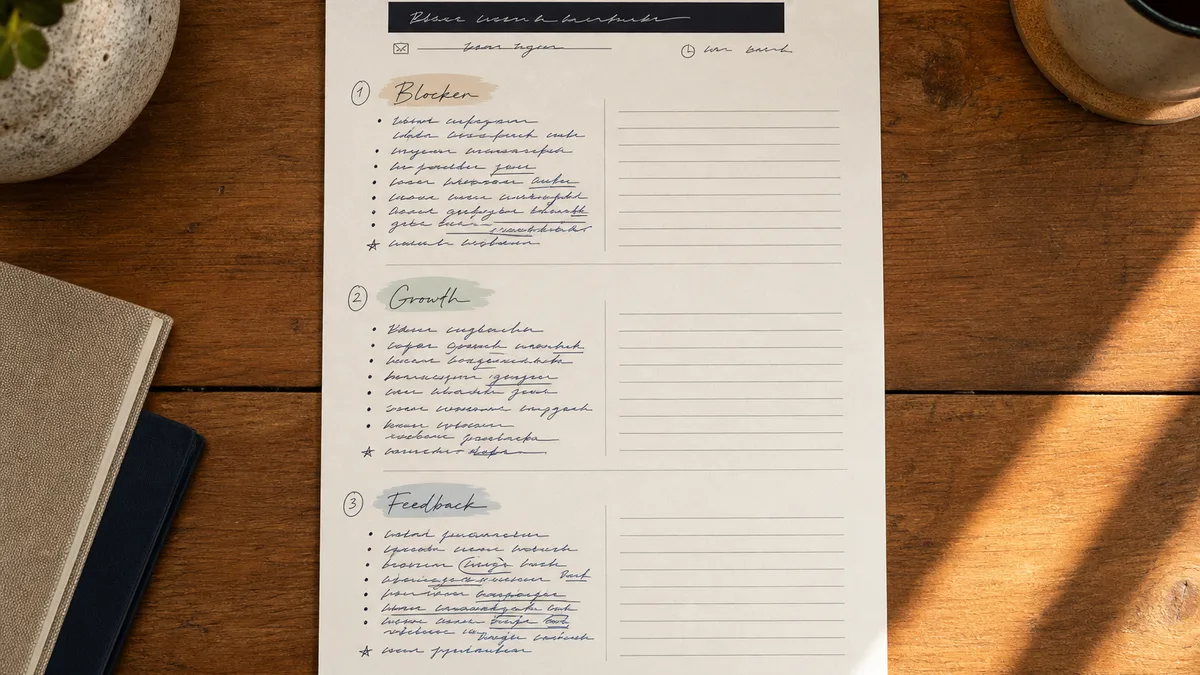
Every engineering org schedules them. Gallup finds only 16% of employees call their last manager conversation extremely meaningful. The rest got a calendar block — check-in, standup with the door closed, or both.
You know the slot exists. What no IC playbook spells out is what to write down before you walk in. Manager training covers listening ratios, Radical Candor quadrants, when to cancel. Your side of the contract: a shared doc, three standing slots, ten-minute prune the night before. Skip that and you don't get a relationship meeting. You get whatever agenda your manager brought — because yours was empty.
Everyone Knows the Meeting — Few Own the Doc
The management literature agrees on one structural fact: the 1:1 is the report's time, not the manager's. Employee-driven agenda. Shared document. Status updates belong in standup or the project tool — not in the only private hour you get each week.
Treat the invite as passive attendance and none of it lands. "Nothing urgent" isn't psychological safety — it's abdication. Seven days to add a blocker, a growth bet, upward feedback. You added nothing. Manager fills the vacuum. Sprint status, usually. Only material on the table.
Meaningful conversations, per Gallup's breakdown, center on recognition, goals, priorities, and strengths. Not ticket velocity. The doc is how you steer toward that mix without waiting for a perfect manager.
The Three-Slot Shared Doc — Refill Before Tuesday
Create one doc. Share it with your manager. Title it 1:1 — <your name>. Three standing headers, never deleted — only the bullets underneath change.
- Slot 1 — Blocker — Something you cannot unblock alone. Needs their leverage: escalation, cross-team intro, policy exception, headcount for review.
- Slot 2 — Growth — A skill, scope, or project bet for the next quarter. Not "I want to grow" — name the outcome. "Own checkout observability" beats "learn more about metrics."
- Slot 3 — Feedback up — To your manager or the org. Process friction, unclear priorities, a decision that landed wrong. Radical Candor treats the 1:1 as upward feedback first — manager-to-report feedback belongs in short bursts right after the event.
Add bullets all week. Coffee chat surfaced a dependency? Slot 1. Retro made you notice a mentoring gap? Slot 2. Manager reorg left your PRs orphaned? Slot 3.
Worked example — backend engineer, auth migration week
- Blocker — Payments squad frozen on our token refresh change. Need you to escalate API compatibility call with their EM before Thursday's cutover.
- Growth — I want the on-call rotation for checkout next quarter — deliberate step toward staff-scope reliability work.
- Feedback up — Last sprint's surprise reorg moved my reviewer twice. I lost three days to re-onboarding reviewers. Can we flag team moves in this doc before they hit JIRA?
That's fifteen minutes of typing spread across five days. It gives your manager something actionable before the meeting starts — the shared-doc pattern Candost's engineer template and Baylor HR's manager guidance both describe.
Night before: prune to three bullets total, not three per slot. One meeting, one priority stack. If Slot 1 is on fire, Slots 2 and 3 can wait — but write them anyway so growth doesn't disappear for a quarter.
The Ten-Minute Prep Ritual
Open the doc. Read last week's action items first. Did your manager deliver? If not, note it without snark — "Still waiting on intro to platform EM" goes back in Slot 1.
Scan the three slots. Promote one bullet per slot maximum into tomorrow's agenda line at the top:
Tomorrow: (1) API escalation, (2) checkout on-call ask, (3) reorg communication
Send a one-line ping if your culture expects it: "Agenda's in the doc — start with the API blocker." Pluralsight's 1:1 guidance and Spinach's employee guide both assume 24-hour visibility. Not performative CC'ing. A signal that you treat the hour as real.
During the meeting, take notes in an Action items section at the bottom — separate from the slots. Who owns what by when. Your manager's commitments go here the same as yours. Credibility is built on small follow-through between weeks.
When the Meeting Becomes Their Standup
You'll get "what did you ship this week?" anyway. Redirect once, calmly:
"I dropped status in the standup thread — can we start with Slot 1? The payments blocker needs your escalation."
If redirect fails twice, document the pattern in Slot 3 next week: "Last three 1:1s became status reviews — I'm not getting time for growth or blockers." That's upward feedback with receipts, not venting.
Cancel culture is a diagnostic. Reschedule beats ghosting — but three cancels in a row without a proposed new time means the slot isn't a priority. Write the ask: "Reschedule to Thursday or reduce cadence to biweekly with a guaranteed slot?" Senior ICs sometimes negotiate biweekly with a longer block. Default weekly until you've earned the exception.
Micromanagement shows up here too — anxious check-ins on tasks you already post async. Name it in Slot 3 once. If nothing changes, that's data about the role, not a failure of your prep.
New manager, no doc yet? Send the template before the first invite lands. "I use a shared 1:1 doc — three slots, action items at the bottom. I'll add items through the week." Sets the norm before bad habits form.
What Belongs in Rotation — Not Every Week
You don't need career storytelling every Tuesday. Rotate depth items across a month — including raise timing and review prep when those calendars approach:
- Team dynamics you'd only say privately
- "How can I help?" — your manager reports upward too; offer leverage on their initiatives
- Long-horizon goals when Slot 2 needs a full half-session
Glen Thomas's EM guide tracks themes over time — burnout, dynamics, growth blockers. Your doc is the trend line. Six weeks of Slot 1 filled with the same escalation is a portfolio problem, not bad luck.
Silence isn't safety. Preparation is.
Empty agenda, manager monologue. Full doc, actual leverage.
What Changes Monday
Duplicate the template. Share it before your next 1:1. Add one real blocker before end of day — not a polished essay, a sentence with a name and a date.
After an internal switch, the first slot with the new manager may already be carrying a hallway sentence. The doc still helps. The leftover story is a different problem.
If your manager has never seen a shared doc from a report, propose it in writing: three slots, weekly refill, action items at the bottom. Most will say yes because it makes their job easier.
The playbook was written for their calendar.
Your prep writes the agenda.
Their job is to show up.
More in People

How to Switch Teams Without Burning Bridges
A polite goodbye does not stop the hallway sentence from opening your next 1:1.
7 min · August 21, 2026
How to Ask for a Raise as an Engineer
The conversation, the timing, the number — without the confidence-culture nonsense
6 min · July 6, 2026
Your First Performance Review — How to Prepare
What to bring, what to say, what to ask — the version nobody gives you before the meeting
7 min · June 25, 2026