Onboarding a Peer When You're Also New to the Estate
Buddy programs assume someone already holds the map. On inherited systems, that assumption is often the first fiction.
 Ihor NesterenkoIT System Analyst7 min read · Jul 27, 2026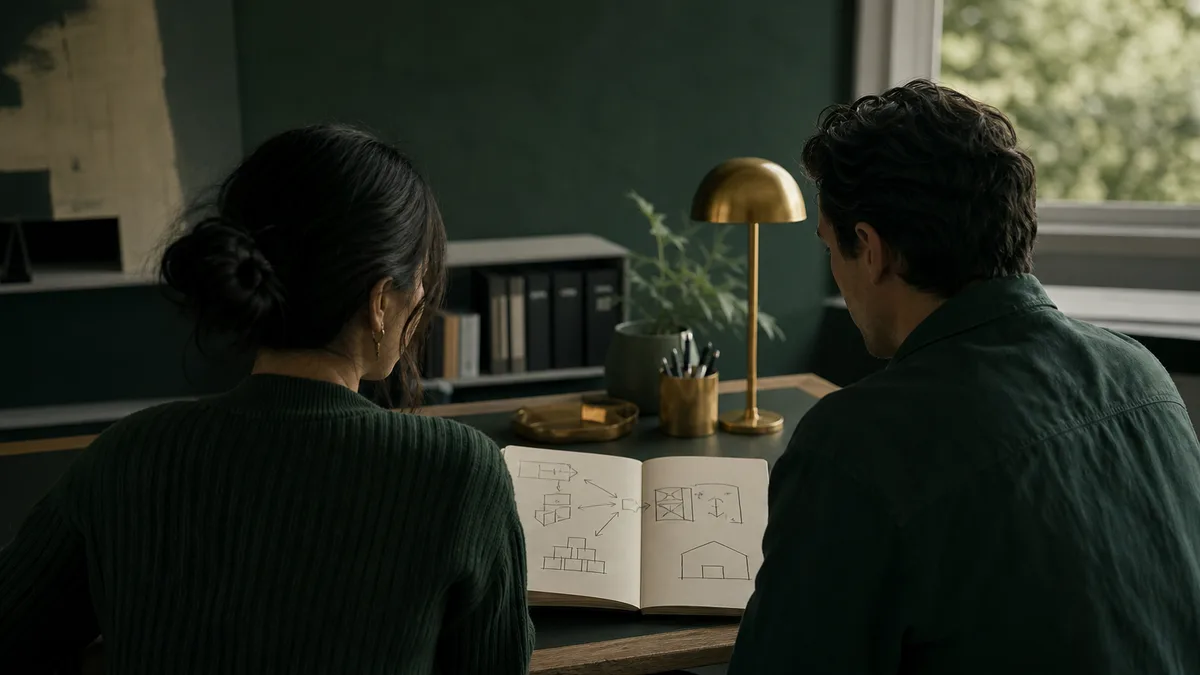
The handover arrived as a shared drive, a vendor PDF that described the product nobody had bought, and a calendar invite labelled "buddy intro." Two analysts started the same Monday on a logistics ERP that had been customised for twelve years. HR had already cast one of them as buddy — the person who had started a fortnight earlier, held a login, and could not yet name which overnight job turned a late ASN into a stock mismatch.
That is the inheritance scene more often than anyone writes down. The estate is brownfield. The SMEs have left. The "buddy" is still learning. And the organisation runs a buddy program anyway, because buddy programs are what responsible employers are supposed to run.
The useful move is not to pretend one of you already owns the map. It is a mutual ramp: you learn the same path together, write down what you find, and treat each other's questions as shared discovery rather than seniority theatre — the same honesty as wiki fiction when the docs lie.
What Buddy Programs Quietly Assume
A workplace buddy, in the ordinary HR sense, is an existing employee who guides a new starter through people, processes, and culture for the first weeks or months. The model assumes someone with enough estate literacy to answer without bluffing.
That assumption is reasonable in a stable team with living documentation. On an inherited system it is often false. The person available to buddy may have started last month. Project-management guidance already warns that buddies with less than a year may lack breadth because they are still learning. Delivery rooms quietly ignore that warning when headcount is thin and the programme is hot.
Peer mentoring research shows that peers can transfer knowledge effectively — when a more experienced peer externalises what they know, including by writing it down. The research does not claim that labelling someone "buddy" creates the experience the label requires.
The failure mode is specific. The cast teacher answers half-confidently. The cast learner edits questions to protect the teacher's face. The estate's real gaps stay invisible for another fortnight.
The buddy label can suppress the useful questions.
New-hire psychological safety is already fragile in the early weeks. Casting one novice as the authority accelerates the silence that team learning needs to avoid.
The Mutual Ramp
If that word is new, the one-sentence version worth keeping is this: a mutual ramp is two people new to the same estate who pick one painful path, walk it together, and leave a living note neither of them could have written alone.
It is not permanent dual staffing. It is not a week of overview meetings. It is scoped discovery with an artefact.
On the logistics programme, the two analysts did not tour every module. They chose the path operations already complained about: late ASN file arrives after cut-off, warehouse posts a receipt anyway, stock position lies until someone notices at pick. They sat at one screen. One drove the UI. The other wrote the note. When either hit a blank — "why does this status skip confirmation?" — both treated the blank as estate debt, not personal failure.
By Friday they had three pages: the path as it actually behaved, the vendor doc claim that did not match, the batch job name nobody had written on the wall, and six open questions with owners. Neither was an expert. Both could now brief a third person without inventing certainty.
That is the logical case. Shared ignorance, written, beats performed expertise without a map.
Two novices with a note can beat one fake veteran with a title.
Software teams report the same pattern: newcomer-friendly documentation and the freedom to ask questions score among the strongest facilitators of learning during onboarding. Exploration works when it is bounded — an under-defined task that still produces a clear learning outcome — not when it is a tour of everything.
Knowledge inside firms is sticky. Transfer fails less from laziness than from causal ambiguity and thin absorptive capacity on the receiving side. A walkthrough that never becomes a note leaves the next hire doing archaeology again.
The mutual ramp fails in three ordinary ways. The first is a note written as status theatre — "order-to-cash understood" with no observed steps. The second is asymmetric silence: one person drives and the other never interrupts, so the blanks stay in one head. The third is scope creep disguised as thoroughness: five paths started, none finished, nothing handable. If the Friday artefact cannot be given to a third person without a live narrator, the ramp did not finish.
One Path Beats the Estate Tour
The temptation in week one is coverage. Show them Finance. Show them Warehouse. Show them the integration spreadsheet. Show them the war stories.
Coverage creates recognition. It does not create operability.
Pick the path that already hurts someone — a late feed, a mismatched stock figure, a customer status that never updates. Walk it end to end until you can name what happens when the happy path fails. Stop when the note can be handed to a third person without a live narrator.
If the path turns out to be a dead module, abandon it without ceremony and pick the next painful one. The mutual ramp is a method, not a loyalty oath to the first flowchart.
Writing Down What You Don't Know
The living note is the product of the ramp. Without it, you have only conversation — and conversation does not survive the next starter.
Keep the note humble. Path steps as observed. Gaps marked as gaps. "We think" labelled as hypothesis. Names of jobs, tables, and people contacted. Dates. No status theatre ("fully understood order-to-cash"). When a sponsor asks for a certainty you have not verified, use the I don't know yet sentence — blank, known boundary, next check.
A useful first page for the late-ASN path looked like this: trigger (file after cut-off), UI screens touched, status codes seen, overnight job name if found, where stock first lies, who in operations notices, open questions with a date. Anything that cannot be verified in the system stays in the open-questions list.
Peer mentoring creates value partly when tacit knowledge is externalised — organised and written so another person can use it. Two novices can do that externalisation because they notice what a long-tenured person no longer sees. The curse of familiarity works both ways; new eyes are an asset if you let them write.
Induction guidance still matters for organisation, people, and role expectations. The mutual ramp does not replace that. It fills the hole buddy checklists leave when the system itself has no honest map — and it is the behaviour brownfield hiring should have screened for.
The Fair Objection — Someone Should Already Know
The fair objection is organisational: someone should already know this estate. Casting two novices as co-discoverers sounds like admitting a staffing failure.
That objection is right about the failure. An estate without recoverable knowledge is a delivery risk. Where the objection errs is in the remedy. Pretending the nearest available person is a veteran does not restore the missing knowledge. It only adds performance pressure on top of the gap.
When one person truly does know more — a remaining SME, a contractor who built the customisation — use asymmetric help on that path. Ask them into the session. Still write the map together. Equal ignorance is not a pose. Equal expertise isn't either.
Mentoring accelerates early contribution when a real mentor exists — including in deliberate onboarding support. Mutual ramp is the practice for the common case where the mentor of the estate does not. When someone already has hours in the mess, the useful desk moves are co-mapping and naming fog — not a greenfield buddy script.
What You Take Into Monday
If you and a peer are both new to a brownfield system this week, try one mutual ramp before you accept the buddy script. Choose one painful path. Walk it at one screen. Leave a living note that names what you do not know.
Which inherited path would you walk first with a peer who is as new as you are — and what would the first page of that shared note have to contain to be useful to a third person?
I'd value hearing how it went — particularly the parts where the map disagreed with the vendor PDF.
More in People
Three Questions Before You Accept the Next Inherited Program
Self-efficacy starts before Day 1 — run the Acceptance Gate, not a motivation essay.
6 min · August 31, 2026

Mentoring Through Inherited Mess — What Helps and What Performs Help
Brownfield mentorship is co-mapping the mess — not performing a greenfield buddy script.
5 min · August 29, 2026

AI Habits Before Policy Exists — Personal Governance That Scales
When Legal has not shipped a deck, the habits you model become the team's policy by default.
6 min · August 27, 2026