Security Training That Sticks — One Observable Behaviour per Sprint
Skip the badges. Pick one desk habit the team can see — and check whether it happened.
 Ihor NesterenkoIT System Analyst5 min read · Sep 10, 2026
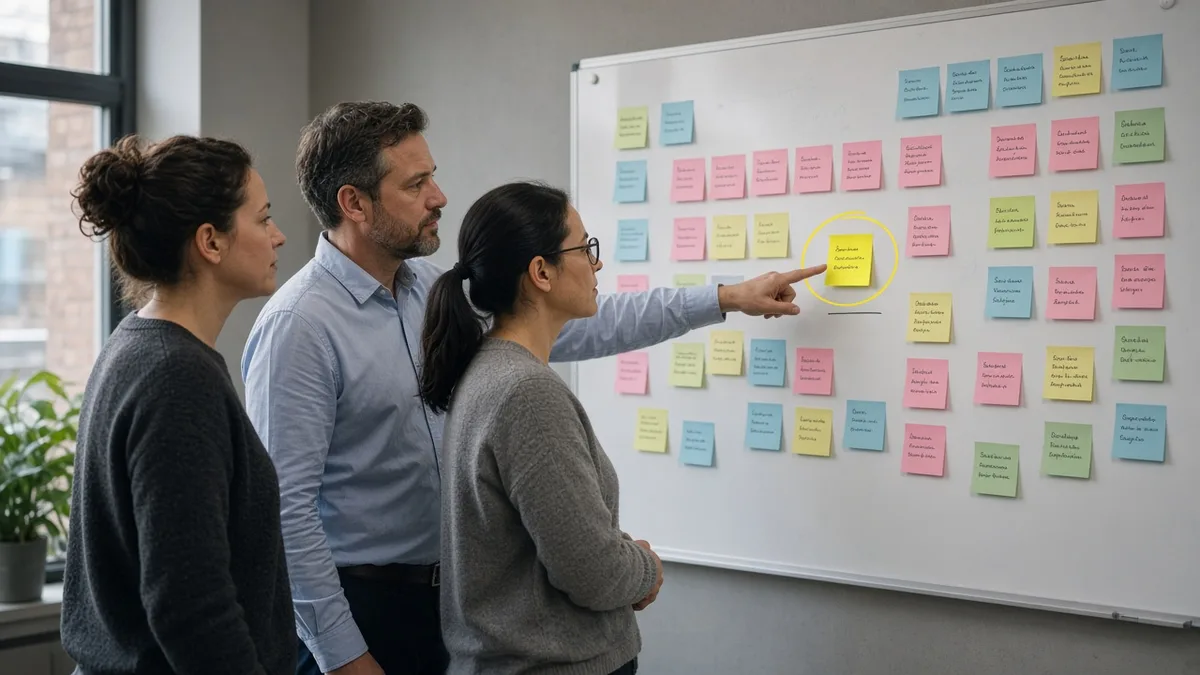
Most delivery teams can finish the annual security module before the reminder escalates. Far fewer can name one security habit they rehearsed together last sprint — and checked, in the open, whether it happened.
That unexamined layer is where training either sticks or only performs stickiness.
Completion Theatre
Call the failure mode Completion Theatre: treating quiz scores, LMS ticks, badges, and phishing click-rates as proof that behaviour changed.
If the phrase is new, keep this version: the organisation measured attendance at the lesson, not whether the desk habit moved.
I have watched a logistics delivery team clear 100% of the awareness course in the same week the shared ops_readonly password still sat in the wiki.
Nobody was malicious. The module asked for recognition of spear-phishing telltales. The job still required a shared login that nobody had time to replace. The training was complete. The estate was not.
Anticipate the pushback: "We have to show completion for the audit." Often true. Compliance still needs a record. The mistake is using that record as the behaviour metric. Awareness programmes often lean on completion rates while the people closest to the work want signals that track actual behaviour. Completion satisfies a mandate. It does not tell you whether the shared login left the wiki.
Self-reports after training are usually flattering. Measured behaviour is less so. Field work on awareness delivery finds intention ahead of behaviour after a single pass — and only repeated delivery narrows the gap. Knowledge from a SETA session can rise and then fade within weeks. That pattern is not a reason to abolish training. It is a reason to stop confusing a completed module with a changed habit.
Gamification makes the confusion prettier. Points prove people engaged the platform. They do not prove the team stopped pasting production extracts to personal drives — the same export habit retros rarely name. Awareness gamification is out of scope here on purpose — it sells engagement. This piece is about observation.
The Sprint Behaviour
Call the practice a Sprint Behaviour: one falsifiable security habit the team commits to for the next sprint, visible enough that a sceptical colleague could say whether it happened.
Plain version first: pick one thing people do or refuse to do, make it checkable, review it once before the next sprint starts.
Three parts keep it honest.
Name the habit in desk language. Not "be more secure." "No shared ops_readonly in the wiki this sprint — rotate to named accounts or escalate the blocker." Or: "Report the first suspicious message in the delivery channel within the hour, even if you are unsure." Or: "No production export to a personal laptop; use the approved path or raise a ticket the same day." Application-level habits outlast technical trivia for a reason — they attach to work people already do.
Attach an owner signal, not a hero. Someone names the habit in planning. Someone else can challenge whether it was observable. Ownership here means the habit has a voice in the room, not that one person becomes unpaid InfoSec.
Put the review where the team already meets. Standup once a week, or a five-minute retro slot. Do not invent a second ceremony. If the habit needs a new meeting to survive, it will not survive a hot programme.
On that logistics team the Sprint Behaviour was the shared login. Week one: password removed from the wiki, temporary named accounts for Dock 3. Week two: one contractor still needed the old path; they said so in standup instead of quietly restoring the wiki line. That sentence was the training. The LMS had never reached it.
Small is the point. Stacking one habit across sprints beats stuffing twelve topics into a single afternoon that the forgetting curve will erase. Annual coverage for auditors can stay. The team's learning loop is the Sprint Behaviour.
Review Without Shame
The review fails if it becomes prosecution.
A missed Sprint Behaviour is data about the system — missing account provisioning, a ticket queue that closes in five days, a vendor path that only works with a shared credential. Treat the miss the way you would treat a flaky integration: name the constraint, assign the next check, leave dignity intact.
What you do not do: public ranking, badge shaming, or "who failed phishing" theatre in the retro. Incident trends and reporting tell more than humiliation dashboards. A colleague who admits they still needed the shared login is giving the team a usable finding. A colleague who hides the need so the score stays green is teaching Completion Theatre by another name.
Remote and rotating contractors change the form of observation, not the rule. "Observable" may mean a ticket, a chat thread, or a checklist in the sprint board. If nobody can point to evidence, you did not pick an observable behaviour — you picked a slogan.
Where Team Habit Stops
Sprint Behaviours do not replace Legal, InfoSec, or the annual LMS when those are mandated. They do not replace a proper tabletop when the risk needs cross-department rehearsal. They do not replace a one-hour incident rehearsal when the product/engineering mix has never sat the first chaotic hour together. They do not settle architecture questions about identity providers.
They answer a narrower question: did this delivery team rehearse one secure habit in the work they already do?
When the constraint sits above the team — budget for named accounts blocked, SaaS that only offers one login — the honest move is escalation with evidence from the review, not another quiz. Habit without a movable constraint becomes moral pressure — the same desk reality gap annual modules cannot close alone. That is not training that sticks. That is pressure that teaches people to hide.
The identity claim underneath Completion Theatre is seductive: we trained everyone. Useful fiction for a filing cabinet. Costly fiction for an estate that still runs on shared passwords. Anticipate the engagement pitch — platforms, streaks, leaderboards — and answer with one behaviour the board can see. Points are optional. Observation is not.
Complete the module if you must.
Pick one Sprint Behaviour the room can see — and review whether it happened.
Related

Sustainable Pace on a Rescue — Personal Rules That Survive the Push
A recovery programme can still write you out of your own week if the extra hours never get an end date.
7 min · August 21, 2026

A Mundane Insider Tabletop With Delivery Colleagues
Facilitate desk-scale scenarios — late file, shared login, silent export — without red-team cosplay.
6 min · August 17, 2026
When Compliance Training Meets How People Actually Work
The completion badge on your LMS and the shared spreadsheet on the file server are both telling the truth — about different things.
7 min · June 22, 2026