Incident Rehearsal for Delivery Teams — a One-Hour Script
You do not need a war room. You need a kitchen timer and the courage to sit in the silence.
 Ihor NesterenkoIT System Analyst6 min read · Oct 8, 2026

The product manager asked a simple question forty minutes into our first rehearsal: "Who calls the warehouse if Dock 3 stops receiving ASNs?" Nobody answered. Someone opened the shared drive. Someone else refreshed Slack. The engineer who knew the overnight job looked at the BA. The BA looked at the lead. The kitchen timer kept ticking. Forty seconds is a long time when it is funny — and then it is not.
That silence is why this piece exists. A delivery team — product, engineering, analyst — can rehearse the first chaotic hour without waiting for Security to finish a full incident-response playbook. What you need is a thin artefact: a One-Hour Rehearsal Script.
This is not a SOC programme. It is a discussion drill sized for people who ship systems and still answer the business when those systems hiccup.
War-Room Fantasy — Why Full Playbooks Wait
Call the failure mode War-Room Fantasy: the belief that rehearsal is unserious until the binder is thick, the roles are colour-coded, and someone has booked a room named Incident Command.
If the phrase is new, keep this version: waiting for costumes.
I have seen programmes delay a first tabletop for nine months while an IR draft circulated. In that time the team still lived through silent integration failures, shared-account surprises after handover week, and "who owns the customer line?" improvisation. The binder improved. The muscles did not.
A tabletop exercise, in the NIST sense, is a discussion led by a facilitator with a scenario and questions — informal, plan-validating, not an equipment deployment. Guidance in NIST SP 800-84 puts typical tabletops in a wide duration band; delivery teams do not need the top of that band to learn anything useful. CISA's own tabletop tips are blunt about the goal: work out problem areas in peacetime, because wartime will not wait for you to align.
So skip the fantasy. Keep the hour. Prefer a mundane scenario — shared account locked after handover, ASN feed quiet, warehouse exception path missing — over nation-state theatre. Mundane is where delivery teams actually freeze. Apocalypse injects produce apocalypse acting. Shared-account injects produce the awkward laugh you can still fix.
Prep is deliberately thin: book sixty minutes, send the scenario seed the night before without spoilers for Inject 2, bring a timer, assign note-taker in the invite. If someone asks for the "official IR pack" first, smile and say the pack is welcome when it exists — the hour is not waiting.
The One-Hour Rehearsal Script
Call the artefact a One-Hour Rehearsal Script: timed beats, named roles in the room, one inject path, three hot-wash questions, one owned fix before anyone stands up.
Plain version: a kitchen timer with manners.
Roles in the room (non-negotiable mix). Facilitator (keeps time; does not hero). Note-taker (writes freezes and gaps). Engineer who can touch the system. Analyst or BA who owns the requirement path. Product (or whoever owns the customer line). If product cannot attend, cancel — an engineering-only hour trains the wrong muscle. Players play their own roles; absences can be part of the scenario.
Scenario seed (pick one mundane). Example used below: after a handover week, the shared integration account used for ASN acknowledgements is locked. Dock 3 stops confirming. Chat fills with "is it down?" Nobody is sure who still has the break-glass path.
Minute map
0–5 — Frame. Facilitator: "This is a discussion. No systems get changed. We are hunting gaps, not grades." State the single objective: name who decides, who communicates, and what the runbook cannot answer in the first hour. Start the timer. (The sticky note that says WAR ROOM can stay ironic on the wall. Dignity for people; comedy for the label.)
5–15 — Inject 1. "09:10 — warehouse reports Dock 3 ASN acks stopped. Status page is green." Ask each role, in turn: What do you check first? Who do you ping? What do you refuse to say to the warehouse yet? Write the answers. Do not rescue the silence.
15–30 — Inject 2. "09:25 — the shared service account shows locked. The person who rotated it left last Friday. The password vault entry was last updated in March." Ask: Who owns unlock? Who owns telling product? What evidence do you need before you call it an incident versus a ops hiccup?
30–45 — Customer path. "09:40 — a key retailer asks if orders will miss cut-off." Product speaks first. If product defers to engineering for the customer sentence, note it. The freeze here is often the funniest and the most expensive.
45–55 — Hot wash. Three questions only: Where did we freeze? Who did we invent as owner? What would we tell the warehouse in one true sentence? Capture gaps. Do not draft a playbook in the last ten minutes.
55–60 — One fix. Name a single owned action with a date — update vault owner, write the warehouse contact line, schedule the next hour. Stand up. The binder can wait.
Optional comic prop, used once: a printed cover sheet titled Incident Command taped over a blank page. When someone reaches for "the playbook," hand them the blank. The room usually laughs. Then someone writes the first real line. That is the point.
That is the reference. Copy it. Change the inject to your estate. Keep the timer.
Three Things the Hour Always Surfaces
The three-part pattern is almost reliable enough to be comic.
First — the freeze. Someone who "knows the system" goes quiet when the question is ownership, not SQL. Forty seconds. A nervous laugh. Then a rush of half-answers. Treat the freeze as telemetry, not character failure. Security training that sticks starts from observable behaviour; rehearsal is the same idea with a timer.
Second — the wrong owner. The room invents a hero — "Security will handle it," "Infra owns accounts," "the vendor support line" — for a decision that is still on the delivery team's desk. Write the invented owner on the board. Ask who can actually reach them in twelve minutes. Often nobody can. That is the finding.
Third — the silent customer line. Engineering can describe the job. Product can describe the retailer. Nobody can say the one sentence that is true, non-panic, and authorised. The rehearsal's job is to make that absence audible while it is still funny. Draft the sentence on the whiteboard before you leave. Ugly English is fine. Silence is not.
Facilitators who keep discussion on objectives and inside time limits are doing the unglamorous half of the craft. The glamorous half is pretending the silence did not happen. Your note-taker's job is to make pretending expensive.
Where Rehearsal Stops
The One-Hour Rehearsal Script does not replace an IR playbook, a SOC retainer, Legal on breach notification, or InfoSec on account policy. It does not replace a mundane insider tabletop when the risk needs a different scenario shape. It does not certify readiness. It does not authorise production changes during the discussion.
It answers a narrower question: can this product/engineering mix name who freezes, who owns the customer sentence, and what the runbook cannot answer — in sixty minutes — before the real page?
When Security's playbook lands, re-run the hour against it. The script is a probe, not a rival religion. When the scenario needs forensics or law-enforcement paths, stop and escalate — that is a different exercise.
War-Room Fantasy will offer a thicker binder. The kitchen timer will still tell you the truth faster.
Run the hour.
Fix the silence you can still laugh about.
Related

Pair Review When One of You Uses AI — Keeping Judgment in the Room
Fluent suggestions are cheap. Spoken accept is the expensive part that still belongs to humans.
6 min · October 1, 2026
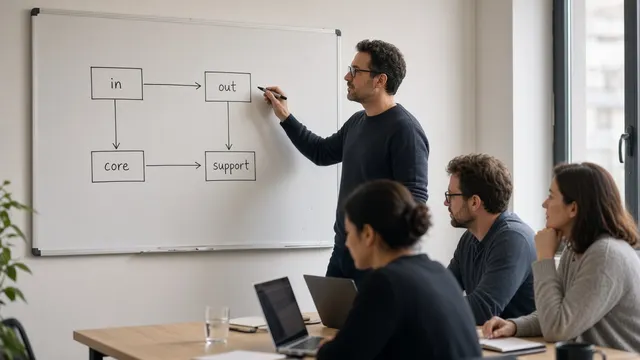
Governing AI-Assisted Discovery Before the Team Normalises It
A lead-owned Discovery Norm Map — paste, recap, pack, escalate — before habits become law.
5 min · September 14, 2026
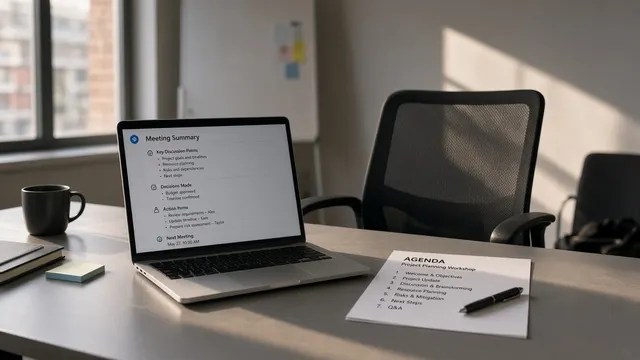
When Copilot Summarises a Workshop You Missed — What to Verify
Treat the AI recap as a claim sheet — decisions, owners, hedges, silences — before it becomes the record.
4 min · September 12, 2026