Your Engineers Don't Need More Freedom — They Need a Legible Queue
Autonomy without visibility isn't empowerment. It's guessing what's already on fire while three more tickets land in Slack.
 Serhii MalyshevSoftware architect and tech lead6 min read · May 29, 2026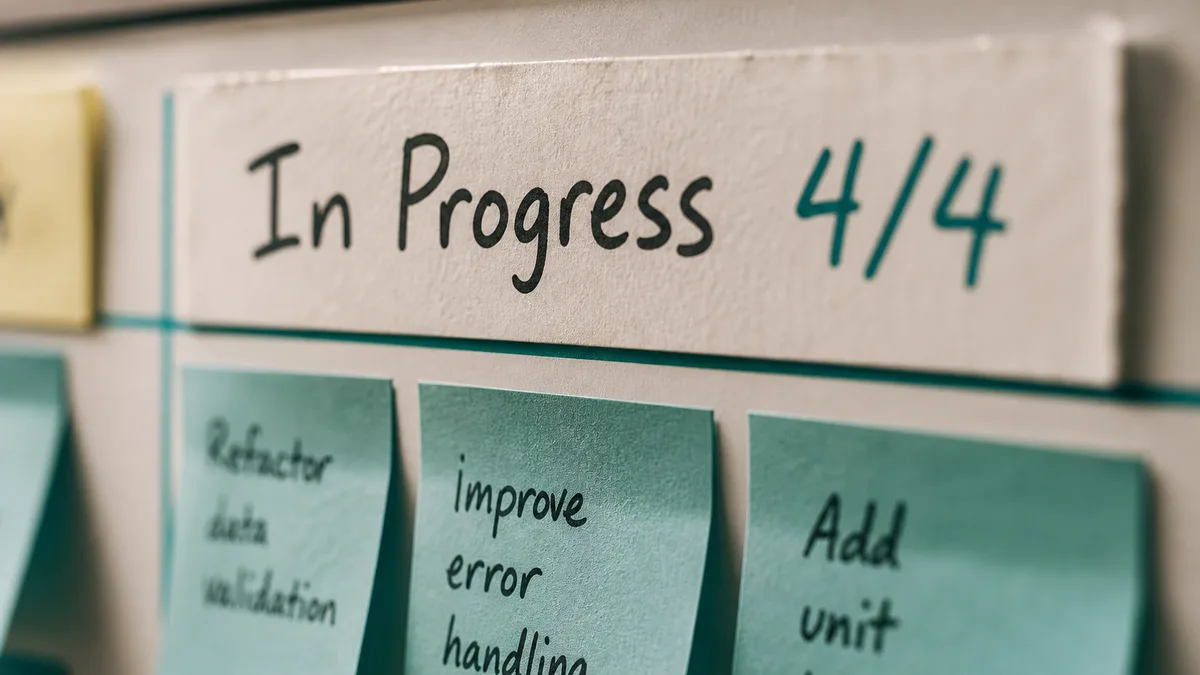
When I first became a tech lead, I thought control was something you granted. Give the squad autonomy. Don't micromanage. Trust the process. The team would feel ownership, and workload would sort itself out because adults manage their own calendars.
Six months later, standup was a performance. Fourteen tickets sat "In Progress" on the board. Everyone looked busy. Nobody could answer "what's actually blocked?" without a ten-minute archaeology session.
The engineers weren't lazy — the system was opaque. They couldn't feel in control because the queue was invisible and every inbound looked equally urgent.
That's the mature read: control is a systems property, not a pep talk. Engineers feel on top of their workload when three things are true — they can see what's in flight, they can protect maker time, and they can say "at capacity" without career tax. Everything else is noise.
The Visibility Stack — three layers that make workload legible
Most "transparency" initiatives stop at a dashboard nobody opens. The Visibility Stack is tighter: queue depth, WIP policy, capacity signal. Three layers, one outcome — workload you can argue about with data instead of vibes.
Queue depth is the honest answer to "what's in flight?" Not story points. Not sprint commitment theater. Count the active items — code review pending, prod investigation open, migration half-deployed. If your team can't produce that number in thirty seconds, they don't control their workload; they navigate fog.
WIP policy is the team-agreed ceiling on concurrent work. Kanban WIP limits exist because limiting work-in-progress makes bottlenecks visible. When the "In Progress" column hits its cap, starting something new requires a conversation — finish, pair, or explicitly drop. PMI's disciplined-agile guidance puts it plainly: visual controls plus policy so people aren't pressured past the limit.
Capacity signal is what lets someone say no without sounding like they're dodging. The signal isn't attitude — it's the number. "I'm at WIP limit" lands differently from "I'm swamped."
Worked example: five engineers, fourteen lies
Picture a five-engineer squad on a payment service. Jira says fourteen In Progress. Standup runs forty minutes because every ticket is "almost done." Nobody refuses incoming Slack asks because there's no shared rule about full.
You reset one variable: WIP limit of four for In Progress — below team size, leaving room for reviews and pairing per Atlassian's guidance. Week one hurts.
Ticket six triggers the conversation: swarm the blocker, finish two items, or move one back to Ready. By week three, standup is fifteen minutes. "At capacity" is a phrase with a number behind it.
That's control. Not less work — legible work.
Maker-Schedule Protection — invoice the interrupt tax
Paul Graham's maker-versus-manager schedule essay is fifteen years old and still painfully accurate. Managers live in hour slots; makers need half-day blocks. A thirty-minute meeting doesn't cost thirty minutes — it throws an exception that can blow a whole afternoon, plus the cascading effect where you don't start hard work if you know the afternoon is shattered.
Every manager-schedule fragment you add to an engineer's calendar is a tax nobody invoices.
Focus blocks are negotiated, visible, and defended. Two ninety-minute maker blocks on the team calendar beat a vague "no meetings before lunch" policy that disintegrates the first time an exec wants a sync.
Office hours batch the interruptible work. Graham's pattern — cluster appointments at the end of the day — maps cleanly to Slack: questions welcome 4–5pm, async otherwise unless production is on fire. The point isn't less collaboration. It's collaboration at a predictable cost.
Interrupt budget names the exception lane. One expedite slot per sprint, manager-owned, for true urgency. Default-everything-is-urgent destroys WIP limits and focus blocks alike.
On-call weeks shrink the budget — shorter focus blocks, explicit "pages interrupt the maker schedule" policy. That's not coddling; it's honest capacity math.
Worked example: the exec sync that wasn't theirs to pay for
Same payment squad. Mid-morning exec sync three days a week. Four engineers attend because the invite says "engineering." Each sync costs a maker half a day — not the meeting length, the reload time.
Fix: manager attends alone, brings back decisions. Engineers keep 9:00–10:30 and 2:00–3:30 as team focus blocks. Slack status reflects it. Office hours at 4pm for "quick questions" that aren't incidents.
Throughput on the migration track jumps not because people worked harder — because they stopped restarting the same mental model four times a day.
Workload Size Isn't the Lever — structure and safety are
Google's Project Aristotle research found something managers misread: workload size wasn't a significant predictor of team effectiveness in their analysis. Structure and clarity — understanding expectations, how work gets done, what good looks like — mattered. Psychological safety sat at the foundation.
Workload size isn't the lever you think it is.
Read that as a manager and it should sting. You can't meeting your way to calm. You can clarity your way there.
Psychological safety isn't a trust-fall offsite. It's the shared belief that you won't be punished for saying the queue is full — Edmondson's framing, applied at Google as the foundation of effective teams. Her survey items include whether people can bring up problems and ask for help without penalty — operational questions for a team drowning in invisible WIP.
Dependability is the other Aristotle pillar that connects here: teammates finish what they promise. Unmanaged queues make dependability impossible. Everyone is context-switching; promises become aspirational.
The SPACE framework adds the efficiency-and-flow dimension that delivery metrics miss — uninterrupted focus time and the ratio of productive work to waiting. DORA tells you how fast code ships. SPACE asks whether the humans shipping it had any contiguous hours to think. Engineers feel out of control in the gap between those two pictures.
High autonomy only works with high alignment — clear problems, constraints, and why they matter. Alignment is front-loaded manager work. Skipping it and calling the result "empowerment" is how you get autonomous chaos.
What not to do — the fixes that preserve the problem
More 1:1s. Checking in feels supportive. Unless you batch them, you're adding manager-schedule fragments to maker weeks. Diagnose the queue first.
Velocity dashboards as capacity tools. Points measure estimation history, not concurrent load. A team can ship fast and still have fourteen items in flight.
"Empower them to push back." Push back against what? Without WIP limits and focus blocks, pushback is interpersonal combat. Give them a number to point at.
Activity metrics on individuals. SPACE explicitly warns against reducing productivity to a single dimension. Surveillance destroys the safety you need for honest capacity conversations.
Staff engineers as the hidden queue. Your principal engineer absorbs "quick questions" that never hit the board. If their WIP isn't visible, your team looks underloaded while your best debugger drowns in unlisted consulting.
Autonomy without guardrails at scale. Freedom without alignment produces local optimization and global thrash. Guardrails aren't bureaucracy — they're the edges that make autonomy usable.
Control isn't a poster about trust.
It's a WIP limit someone can cite in standup, and a calendar that treats a maker afternoon like it's worth more than a status sync.
Related

Building a Technical Roadmap That Survives Reality
Quarterly planning when the requirements change monthly and the backlog is a lie
8 min · August 17, 2026

When Self-Organization Becomes Abdication
The team left to figure it out alone — where autonomous stops being a compliment
6 min · August 14, 2026

Engineering Goals That Don't Evaporate
Setting and holding quarterly goals when every sprint is already on fire
7 min · July 12, 2026